Modernization That Protects Your Home During Removal
Popcorn Ceiling Removal in Central for homes built in the 70s and 80s where textured ceilings trap pollen and dust
Many Central homes from the 1970s and 1980s still have popcorn ceilings that collect dust, trap pollen, and make rooms look dated no matter how fresh the paint is. The texture can't be cleaned effectively, so allergens accumulate in the peaks and valleys, affecting indoor air quality for anyone sensitive to dust or pollen. Nicholson's Painting handles popcorn ceiling removal using a wet process that minimizes dust and protects your furniture and flooring from the debris that falls during scraping. This licensed contractor knows proper safety protocols for ceilings that might contain asbestos in older homes and what surface conditioning is needed afterward so the ceiling accepts paint smoothly.
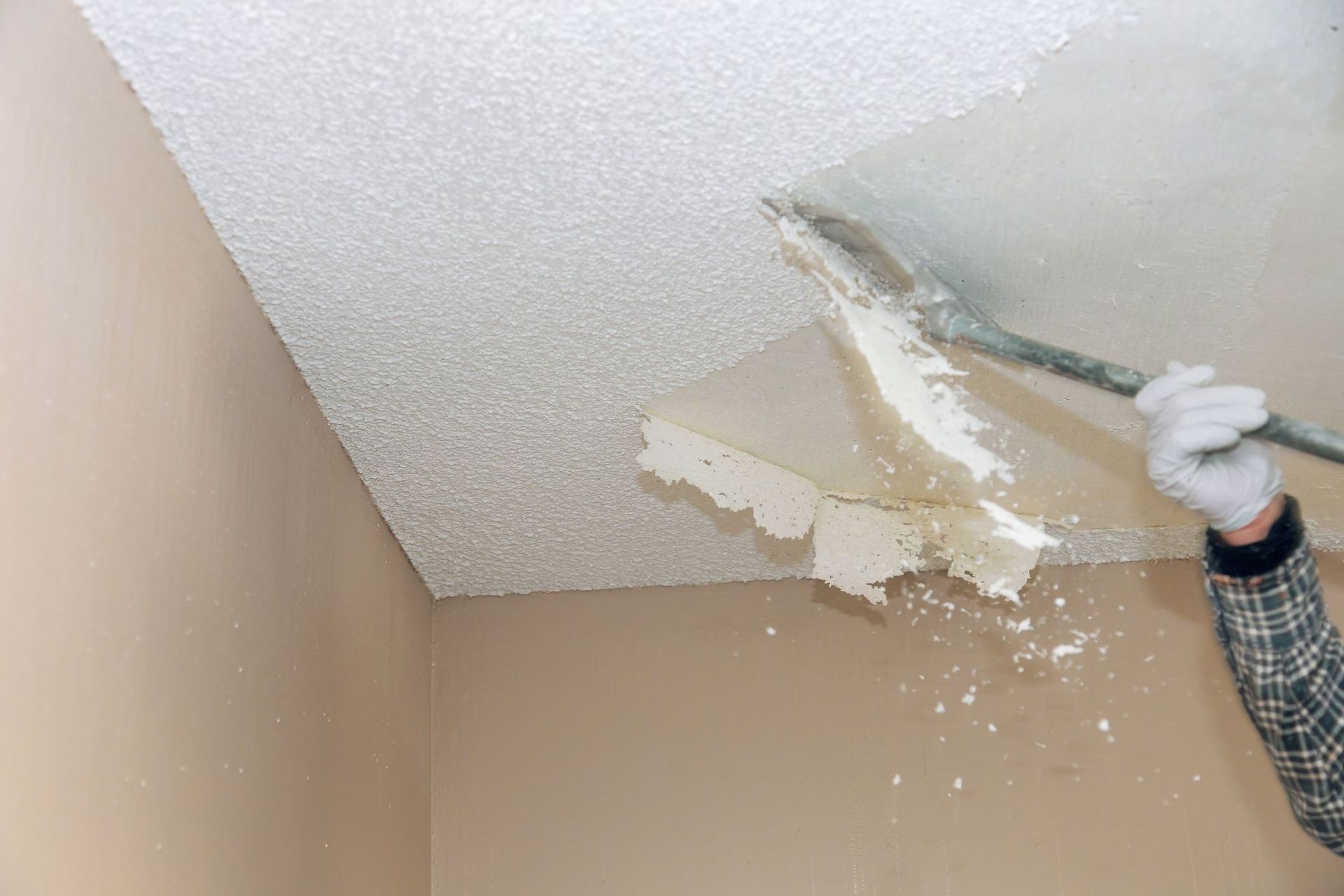
The removal process involves spraying sections of ceiling to soften the texture, then scraping it away carefully to avoid gouging the drywall underneath. Wet removal contains the mess significantly better than dry scraping, though the work still requires thorough furniture protection and floor covering because debris does fall. After removal, the ceiling surface needs inspection for damage that occurred during original texture application, then repair, priming, and often a skim coat to create the smooth finish that modernizes the room's appearance.
Arrange a consultation to discuss your ceiling's condition and what protection your home needs during the removal process.
How Challenging Removal Projects Are Handled Safely
Dust-free wet removal keeps airborne particles minimal during scraping, protecting your HVAC system from contamination and making cleanup significantly more manageable than dry methods that send dust throughout the house. Safety protocols matter especially in homes built before the mid-1980s where popcorn texture might contain asbestos, requiring testing before any removal work begins. Experienced contractors understand when specialized abatement is needed and won't proceed until proper safety measures are in place.
After removal, your ceilings appear smooth and flat, ready for modern paint finishes that reflect light evenly instead of creating the shadow patterns textured surfaces produce. The room feels taller and cleaner without the dated texture catching your eye every time you look up. Surface conditioning after removal addresses gouges or damage from the scraping process, then primer seals the ceiling so paint coverage stays uniform without absorption variations that create blotchy appearance.
Timeline depends on ceiling square footage, texture thickness, and how well the material was applied originally—some popcorn ceilings scrape off easily while others were applied over paint or primer that makes removal more difficult. Honest assessment upfront prevents surprise delays or additional costs once work begins. The project creates significant mess despite wet removal methods, so furniture protection and drop cloths are essential throughout the space being worked on.
Answers to Frequent Service Questions
Homeowners considering removal want to understand safety concerns, what the process involves, and how their home gets protected during work.
What makes wet removal better than dry scraping?
Spraying the texture before scraping softens it so removal is easier and keeps dust minimal compared to dry methods that create clouds of airborne particles. In Central, where humidity already affects indoor air quality, minimizing dust during removal prevents HVAC contamination and makes cleanup substantially faster.
How do you protect furniture and floors during removal?
Everything gets covered with heavy drop cloths and plastic sheeting, and furniture is moved away from work areas when possible. Despite wet removal containing most debris, scraping popcorn texture still drops material, so thorough protection prevents damage to your belongings and reduces cleanup time afterward.
When is asbestos testing required before removal?
Homes built before the mid-1980s should have texture tested before any scraping begins, because popcorn ceiling material from that era sometimes contained asbestos fibers. Licensed contractors know proper safety protocols and won't proceed with removal until testing confirms the material is safe to handle or specialized abatement is arranged.
What does the ceiling look like after popcorn removal?
The surface appears smooth and flat after removal, repair of any damage, and application of primer. Most ceilings need some joint compound work to address imperfections revealed once texture is gone, then sanding and priming before final paint creates the modern appearance that updates the entire room.
How long does popcorn ceiling removal take?
Timeline varies based on square footage, texture thickness, and how well it was originally applied—heavily painted texture takes longer to remove than unpainted material. A typical bedroom might take one to two days including removal, surface repair, and initial priming, though drying times between coats extend the schedule before final painting.
Nicholson's Painting approaches ceiling removal projects with the same attention to safety and detail that defines all their work, treating your home with care and providing straight answers about what the project involves. Contact them for an assessment that addresses your specific ceiling conditions and protection requirements during the removal process.